Why 'misconceptions' matter more than we think
What conceptual change research actually looks like in the classroom

For a long time, science teaching has been built on a simple assumption: if we explain things clearly enough, students will learn them. So we break ideas down, explain them step by step, and check if students can recall them. And often, they can. They fill in the blanks, define key terms, and get good test scores. But change the question slightly, and they struggle. Ask them to explain their thinking, and it falls apart. So I’ve been questioning are they actually learning, or just remembering?
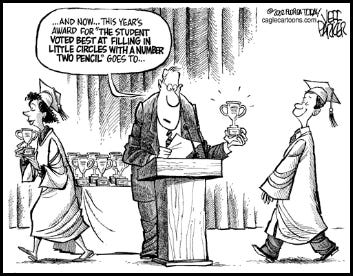
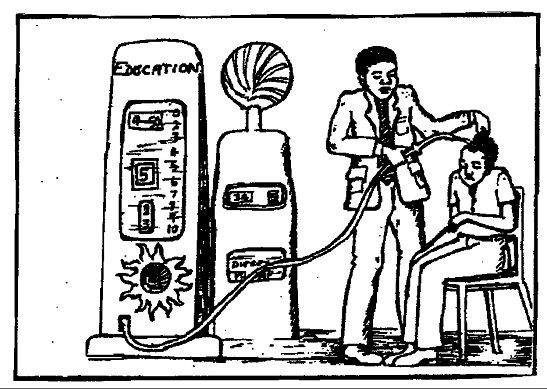
One of the biggest shifts for me has been recognising that students already have ideas before we teach them. They’re not ‘empty vessels’ waiting to be filled. And they may not want to ‘be filled’! They come with explanations built from everyday experience, language, and intuition. And those ideas don’t disappear when we introduce scientific ones. They stick. And often, they get in the way. So if we don’t find out what students are thinking, how can we build on it?
What conceptual change research says
Conceptual Change Research (CCR) helped me reframe this. Instead of focusing on what students learn, the concern is how their thinking changes. And the key idea is that learning isn’t adding knowledge but reshaping what’s already there. Students’ so-called “misconceptions” aren’t just wrong answers. They’re often logical, internally consistent, and based on experience. Which means correcting them isn’t enough. We need to help students rethink and reorganise their understanding.
So how do we actually do that?
CCR suggests a few broad approaches:
Cognitive conflict: challenge students’ ideas by showing when they don’t work and introducing new ones which offer a more logical explanation
Cognitive bridging: linking together old and new ideas, often using models and analogies
Ontological shifts: help them rethink what kind of category something belongs to (eg. often in science, as an entity or a process)
But none of these work all the time, as learning isn’t just cognitive, but shaped by motivation, emotion, and students’ worldviews. There’s no one-size-fits-all method, nor should there be!! So CCR works best as a conceptual lens to inform teacher practice. Here’s what this looked like in my classroom…
The biggest shift when reflecting and applying CCR in my classroom was moving from delivering content to working with students’ thinking. Before teaching evolution, I asked them to do a quick google form quiz. Not only did the students then realise that I care about what they think, but it showed that most students thought organisms evolve “from worse to better,” and 84% used teleological reasoning (e.g. “they adapt because they need to”).
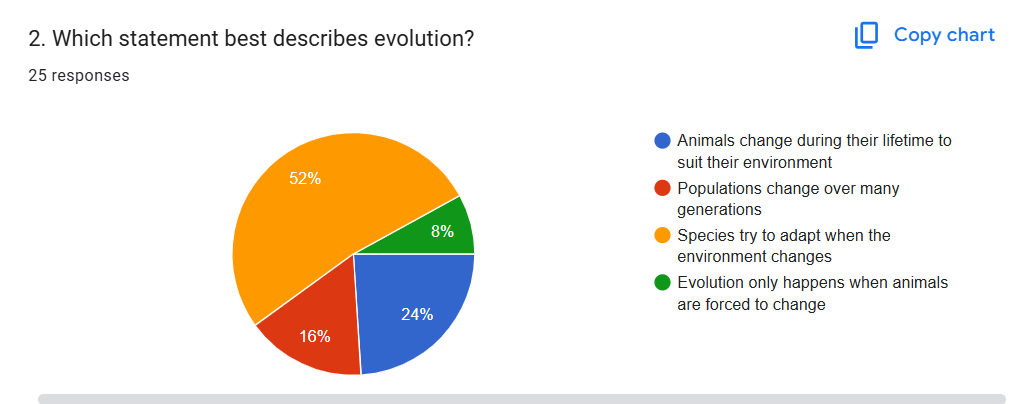
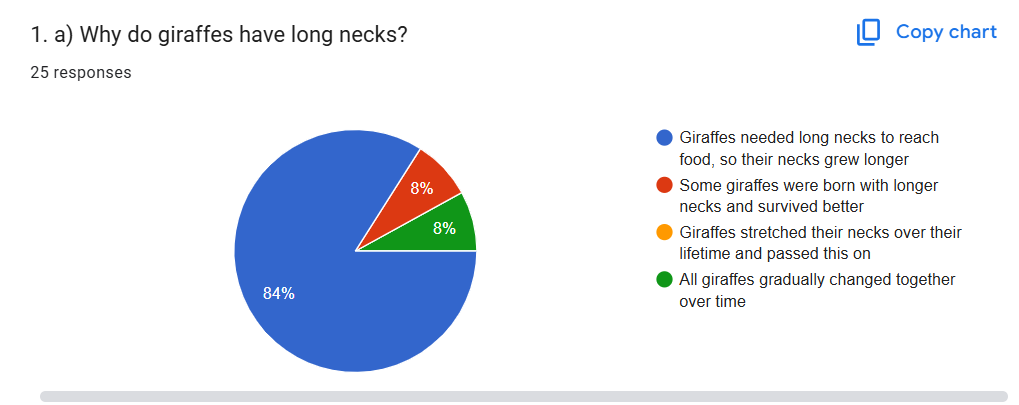
I shared this with them, opening up discussion and helping them realise that it’s completely normal to have these ideas.
I then introduced questions to gently challenge them:
Why didn’t giraffes evolve long necks sooner if they needed them?
Do strong parents always have strong children?
If organisms adapt because they need to and to always be better, what would we expect to observe in nature? Do we see this happen?
If species “need” to survive, why do extinctions happen?
This created a sense of conflict, but in a way that felt safe and depersonalised. Students could see the limits of their thinking without feeling shut down. And from there, we explored the evidence for a theory of natural selection. One activity involved students using different tools to ‘eat’ different types of seeds. When asked who ate the most seeds, we saw that there was not one ‘best’ beak, but it depended on the environment they found themselves in. This helped them move away from the idea of evolution as a determined trajectory of progress, towards understanding it as an dynamic process shaped by context.
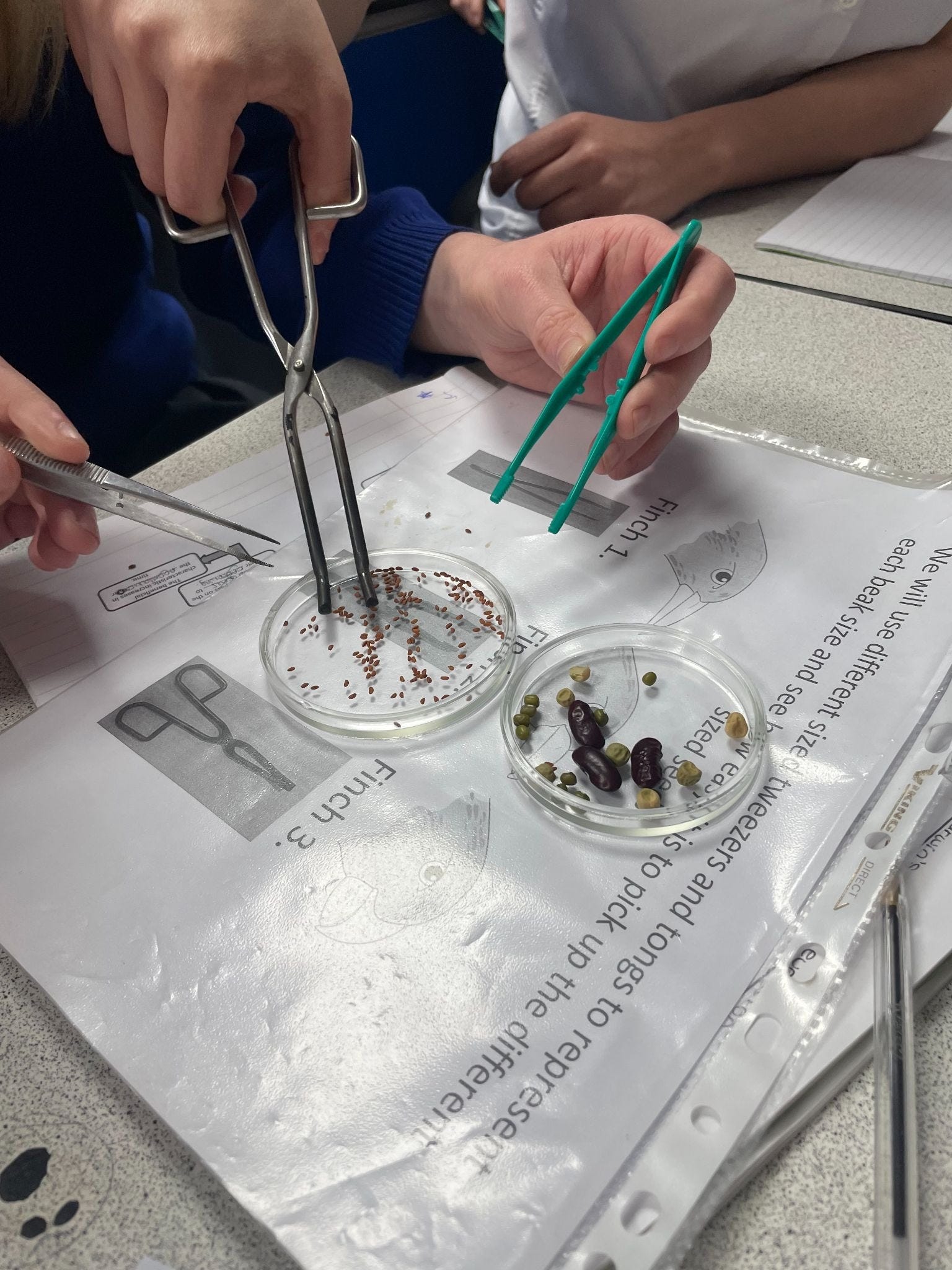
What I liked most was that students took it further than I planned, where stealing seeds off each other allowed us to discuss the influence of behaviour on competition as additional factors. That’s when you know they’re really thinking!
What changed?
In the four years I’ve been teaching the level of understanding in the class was the best yet, and I was super impressed with the discussion and exam questions coming out of it. One paticular student voted in the pre-diagnostic quiz:
Species change because they need to adapt
Giraffes needed long necks to reach food, so their necks grew longer
Explaining his reasoning as:
“Because they adapted so they could reach the leafs on trees”
And after this lesson, this was his answer:
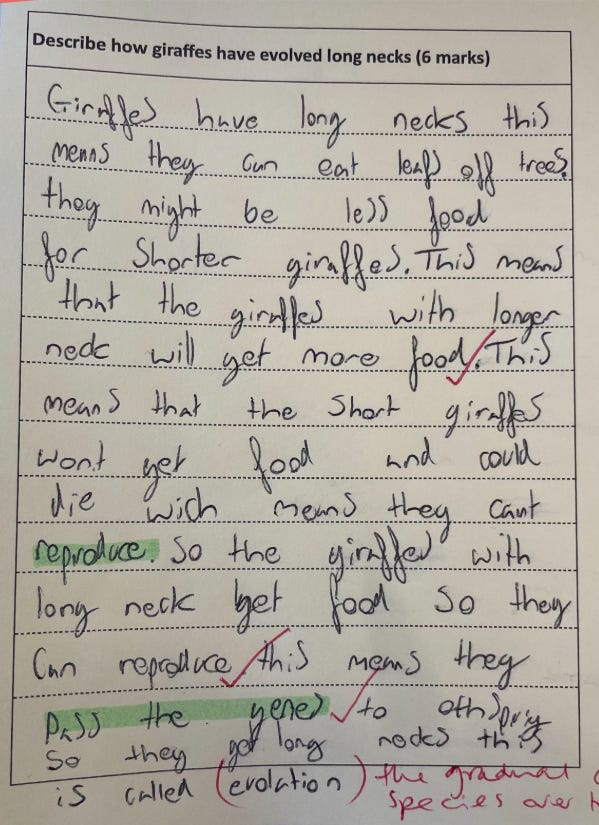
Students could recall the steps of natural selection, and show the implications of each.
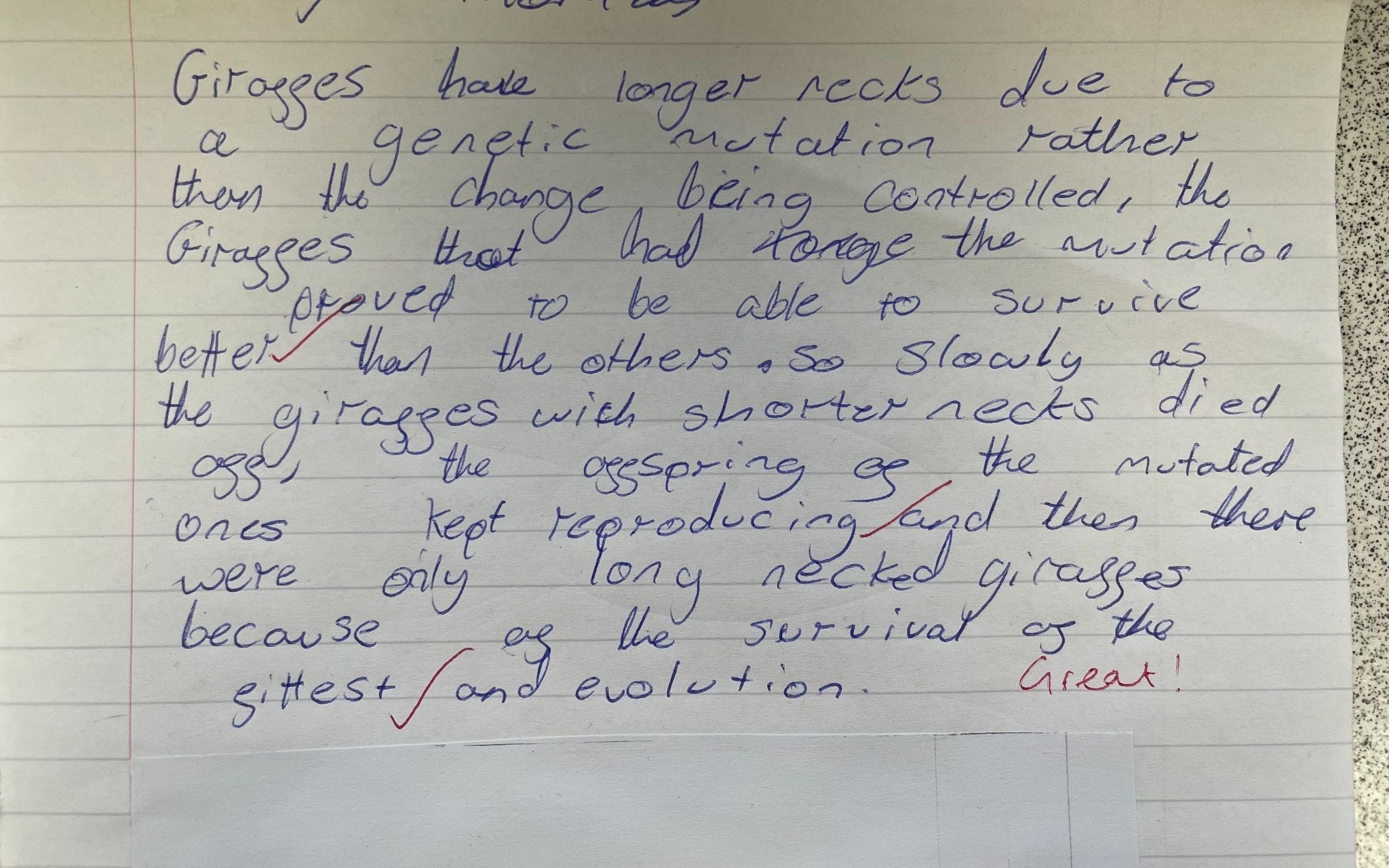
But also, the use of comparative reasoning (“rather than…”) I felt showed a deeper level of understanding. They were able to talk more precisely about variation and environment and importantly apply ideas, not just repeat them! The reality is it’s messy, and it always will be in a diverse classroom of needs, ideas and abilities. Time is limited, exams reward recall and some topics challenge students’ beliefs. But this shows how effective it is to begin with the students! And directly discuss what they already believe with what you’re trying to get across.
My takeaways:
CCR deepens understanding of how students learn Biology and strategies can be applied in the classroom to support students’ conceptual understanding. It’s most useful when applied flexibly, integrated with affective and sociocultural perspectives and inspires thoughtful lesson design. It hasn’t given me a script to follow as there’s no perfect strategy. But it’s allowed me to think more about what my students are really thinking and how to surface and work with those ideas.
The ideas that we frame as ‘misconceptions’ aren’t just mistakes to fix but are the starting point for learning. So it is important to:
Diagnose prior conceptions before teaching a major topic
Design at least one deliberate cognitive conflict moment
Use the history of science to depersonalise misconceptions, and show how we often start with intuitive ideas and change these when evidence shows we need to!
For further reading on conceptual change, I recommend:
Aleknavičiūtė, V., Lehtinen, E. and Södervik, I. (2023) ‘Thirty Years of Conceptual Change Research in Biology – a review and meta-analysis of Intervention Studies’, Educational Research Review, 41, p. 100556. doi:10.1016/j.edurev.2023.100556.
Chi, M.., Roscoe, R. (2002). The Processes and Challenges of Conceptual Change. In: Limón, M., Mason, L. (eds) Reconsidering Conceptual Change: Issues in Theory and Practice. Springer, Dordrecht. https://doi.org/10.1007/0-306-47637-1_1
Pacaci, C., Ustun, U. and Ozdemir, O.F. (2023). ‘Effectiveness of Conceptual Change Strategies in Science Education: A meta‐analysis’, Journal of Research in Science Teaching, 61(6), pp. 1263–1325. doi:10.1002/tea.21887.
Pintrich, P.R., Marx, R.W. and Boyle, R.A. (1993). ‘Beyond cold conceptual change: The role of motivational beliefs and classroom contextual factors in the process of conceptual change’, Review of Educational Research, 63(2), pp. 167–199. doi:10.2307/1170472.
Posner G, Strike K, Hewson P, and Gertzog W. (1982). Toward a theory of conceptual change. Science Education, 66(2), 211–227.
Sinatra, G.M., & Pintrich, P.R. (Eds.). (2003). Intentional Conceptual Change (1st ed.). Routledge. https://doi.org/10.4324/9781410606716